
Designlab Experience
Designlab Experience, the architectural design studio behind installations, pavilions and events across Saudi Arabia and the Gulf, comes off a hosted headless CMS and onto Laravel. A hundred and eight projects, a forty-seven film library and more than a decade of press, rebuilt pixel for pixel and handed back to the studio to own and edit itself.
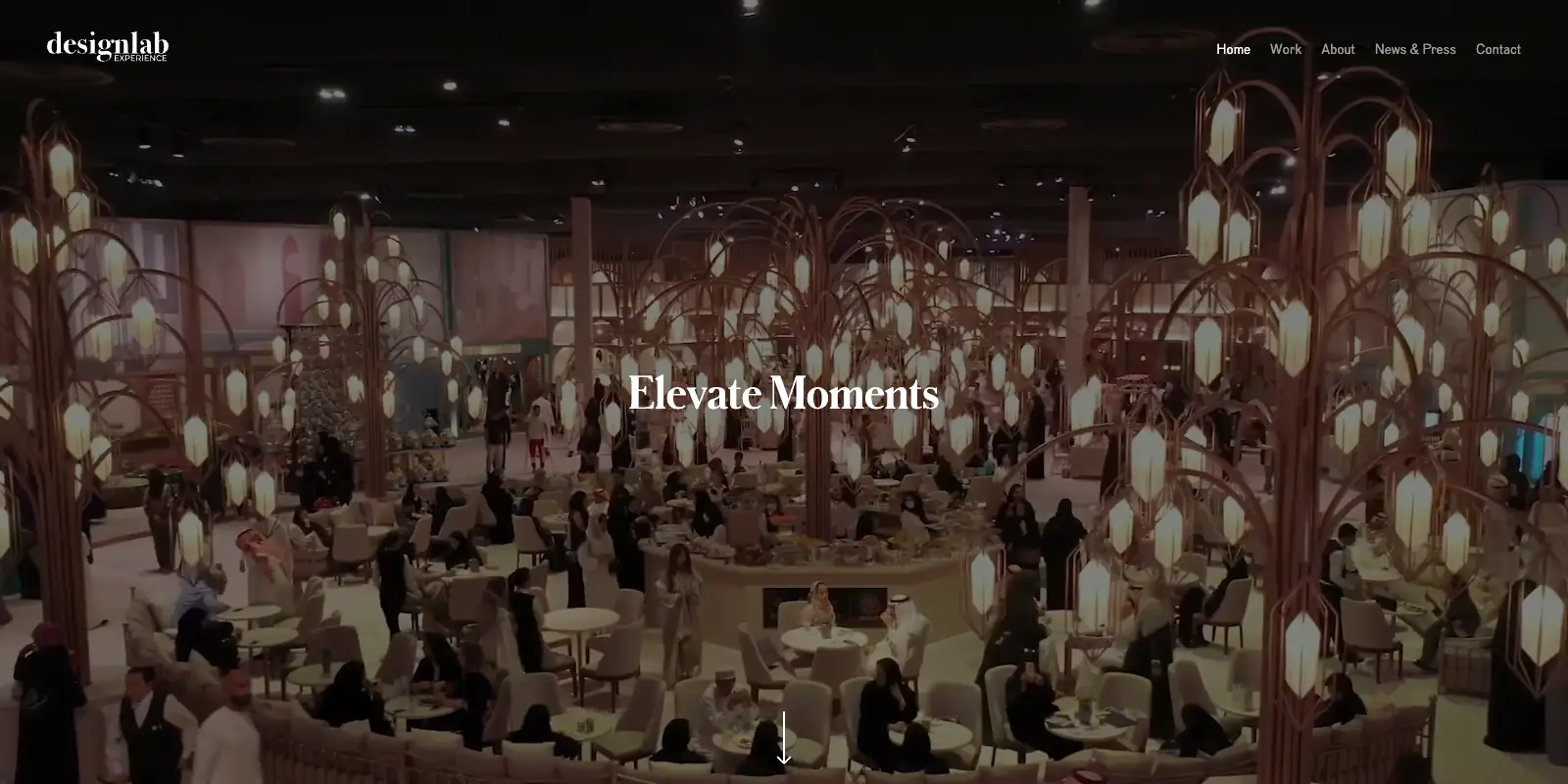
The challenge: more than a decade of work, held on a platform somebody else owned
Designlab Experience is a creative studio with offices in Dubai, Riyadh and Beirut, led by managing partners Mootassem El Baba and Hibah Albakree alongside a team of around forty architects, designers, strategists and producers. The work is the kind you walk into rather than look at. Cityscape pavilions, Layali Diriyah installations, the Saudi Cup, Formula E, private weddings and gala dinners, retail and hospitality environments, stage design and public art, largely across Saudi Arabia and the Emirates with projects reaching into Qatar and Kuwait.
For a studio like that the website is the portfolio, and this portfolio is enormous. A hundred and eight completed projects, each with its own photography, its own narrative and its own set of specifications. A library of forty-seven films. Long-form making-of stories. Forty pieces of press coverage running back to 2014, from WWD and Arab News to CID Magazine. All of it published, all of it maintained, and all of it still growing.
The whole archive was sitting on a hosted headless CMS, with a separate JavaScript front end deployed to somebody else's hosting again, and the arrangement had been outgrown in four directions at once.
The bill was the obvious one, because a hosted CMS prices by plan and by seat and the plan you need climbs with the volume of content. Then came the ceilings, since that kind of CMS caps how many records you can hold and how those records are allowed to reference one another, which is a real constraint on a studio that publishes a project a month and wants projects, films, press and making-of stories all cross-referencing each other. Third was control, since page weight, markup, redirects, the sitemap and the other unglamorous details that decide how a site performs in search sit awkwardly across the seam when the content lives on one vendor's platform and the front end runs on another's. And fourth, underneath all of it, Designlab was renting the thing its new business runs on.
The brief was to move the whole site onto something the studio owns outright, without a single visitor noticing anything had happened.
What we built: the same website, rebuilt on Laravel
We rebuilt the site from the ground up on Laravel, matching the existing design to the pixel and then porting every piece of content across. Same identity, same layout, same restrained monochrome palette, same typography. What changed sits entirely underneath.
- The full portfolio, on permanent addresses. All 108 projects carry across, each on its own flat, word-based URL. A project page opens on a full-height hero, runs through alternating image and text sections, and carries the specifications that matter to this kind of work: the year, the location, and the size of the event or the space.
- A portfolio you browse by discipline. The index opens on six project types rather than a wall of thumbnails, from Weddings and Private Events through to Performance Art and Stage Design, then loads nine projects at a time as you work down. A project can sit in more than one type, which is the honest way to file a build that is both an urban experience and a hospitality installation.
- Every photograph, full screen. Project galleries run as a carousel, and every image on the page, gallery or body, opens into a full-screen viewer that puts you back exactly where you were when you close it. For a studio whose product is photographed, the images had to be the interface rather than decoration around it.
- A forty-seven film library that costs nothing until it is asked for. Each film sits on its own page behind a still image and a play button, and nothing loads from the video host until somebody actually presses play. A page full of films stays light until a visitor wants one.
- Press, in one archive. Forty features from 2014 onwards, newest first, each with its date, its excerpt and a link out to the original coverage. The studio adds one whenever a piece lands.
- Behind the scenes as its own content type. The long-form making-of stories are held separately from the projects and cross-linked in both directions, so the finished-project narrative and the how-we-actually-did-it story can each be told properly instead of competing for the same page.
- The studio, the process and the people. Forty team members across seven departments, full profiles for the management team, and the studio's own account of how it works, from research and concept through to fabrication and installation.
- Enquiries and applications, handled on the site. A contact form that routes straight to the studio, all three offices with their addresses and map links, and a careers page that takes a complete application on site, CV and portfolio uploads included, rather than pointing at an email address.
- A back office the studio runs itself. Every project, film, press item, story and team member is edited by Designlab in their own content management area. No developer, no ticket, no extra platform seat to buy.
Built to be found, project by project
A portfolio only earns its keep in search if the individual pieces are reachable. Every project, film, press item and person has a permanent address of its own rather than living behind a filter, which puts 216 pages into a single XML sitemap. Canonical tags are set correctly on all of them, the old plain and www addresses redirect properly to the canonical domain, and a missing page returns a genuine, branded 404 rather than a soft one. Pages are served compressed, and images load lazily behind a low-resolution placeholder so a long project page fills in as you scroll rather than all at once.
Common questions about the Designlab Experience website
Why move off the old platform at all?
Four reasons at the same time. The plan cost rises with the volume of content, a hosted CMS puts caps on how many records you can hold and how they can reference each other, the technical detail that drives search performance is split awkwardly between the content vendor and the hosting vendor, and at the end of it you are renting the platform your business depends on. On Laravel, Designlab owns all four.
Did the site change for visitors?
No. It is a like for like rebuild. The design, the layout, the typography and the navigation are the same, and every project, film, press item, story and address carried across. The change is entirely underneath.
Can the studio update it themselves?
Yes. Projects, films, press coverage, making-of stories and team profiles are all edited by the Designlab team in their own back office, without a per-seat charge every time somebody else needs to publish.
A hundred and eight projects, forty-seven films and more than a decade of press, lifted off a rented platform and rebuilt on Laravel pixel for pixel, then handed back to the studio to own and run.
The result: the same site, on foundations they own
Designlab Experience now runs the website it already had, on a platform nobody can price it out of. The portfolio has no item ceiling, the content is theirs to edit and to export, the subscription that grew with their content is gone, and the parts of the build that decide how the site performs are finally in the studio's hands rather than a vendor's. Everything a visitor sees is exactly where it was. Everything the business depends on has moved.
Want results like these?
Tell us what's slowing you down. We'll show you a finished preview before you pay anything.