
Websites for accountants and professional services firms
Varsuite builds websites, client systems and careful AI automation for accountants, advisers, consultancies and other professional firms across the UK. Sites that survive the referral check, and systems that give you your evenings back.
Clients arrive by referral, then check you out online
Professional services has a distinctive buying pattern: most new clients arrive through recommendation, and nearly all of them check the website before making contact. The site rarely creates the lead, but it regularly kills one. A partner gets recommended at a dinner, the prospect looks the firm up on Sunday evening, and what they find either confirms the recommendation or quietly undermines it. A dated site does not just look bad; it makes the referrer look wrong, and prospects notice that on the referrer's behalf.
What the checking prospect wants is specific. Do you act for businesses like theirs, in size, sector and situation? Who would they actually be dealing with, and do those people seem credible? What is the process for becoming a client, and does anything on the site indicate what it might cost? And is there any evidence you are alive: recent content, current team, this year somewhere on the page? Firms answer these questions unevenly because the site was written for peers rather than prospects, full of service nouns and empty of situations.
The switching dynamic matters too. Clients of accountants, solicitors and advisers rarely shop around casually; they move when something breaks, a missed deadline, an unreturned call, a fee surprise, or when something changes, growth, a sale, a new requirement. When that moment comes they move fast, and the firm whose website plainly addresses their situation gets the enquiry. Being present for those moments is a findability problem, which our SEO and AIO automation service works on continuously, and a clarity problem, which is where a properly structured website earns its keep. We build sites for professional firms of many kinds, including SmallWorld IT, a managed IT provider, and DesignLab Experience, an architectural design studio, both on our work page.
What a professional services website must do
A professional firm's website has one overriding job: make the next step feel safe. Everything on it either contributes to that or gets in the way.
- Speak to situations, not just services. 'Audit and assurance' is a department; 'selling your business', 'HMRC enquiry', 'outgrowing your bookkeeper' are situations clients recognise themselves in. Pages organised around the client's problem outperform pages organised around your org chart, both with readers and in search.
- Show the people. Professional services are bought person by person. Real photographs, honest biographies, who does what. A firm that hides its people reads as a firm with something to hide, or nothing to show.
- Handle fees like a grown-up. You do not need a price list; you need to not flinch. Explain how you charge and what a prospect can expect from a first conversation. Silence on money reads as expensive and evasive.
- Make contact low-stakes. A named person, a direct line, a form that promises a human reply, and a stated next step: a conversation, not a commitment.
- Look after by design. Fast, accessible, current. In a trust business, a broken link is a small broken promise.
Every Varsuite build is produced quickly by AI and then reviewed, tested and signed off by a person before it reaches you, which is an appropriate production model for an industry that lives by review. A brochure site is £500 plus £100 a month, covering hosting, security monitoring and unlimited content and design changes within fair use, so team changes and new service pages are maintenance rather than projects. The full numbers, including how larger builds are scoped, are on the pricing page, and our guide to what a website costs in the UK gives the wider market context.
Two audiences beyond prospects are quietly reading as well. Potential hires research a firm exactly the way clients do, and in a profession competing hard for talent, a site that looks like the past reads as a firm that works like the past. Existing clients use the site too: to find the right contact, check a detail, or send the referral that started this section. A site that serves all three audiences is not three times the work; it is the same clarity, applied consistently, and it is the cheapest recruitment advertising a firm will ever run.
Turning expertise into content that ranks and gets quoted
Every professional firm sits on the raw material of excellent marketing: the questions clients ask every week, and the answers the firm gives. The firms that publish those answers steadily become findable and quotable; the rest stay invisible outside their referral network. The obstacle has never been knowledge, it is time: content plans agreed in January are abandoned by March because chargeable work always wins.
That is the specific problem our automated content marketing solves. From £100 a month, AI content and blogging produces a steady stream of articles drawn from what your firm actually advises on: deadlines and changes your clients need to know about, plain-English explainers of the questions they search for, guidance organised around the situations your best clients arrive in. Everything is reviewed before it publishes, which in a regulated profession is not optional, and the workflow can keep every piece on your approval so nothing goes out without a partner's eyes on it.
The payoff has doubled in recent years. Traditional search still matters: prospects search their questions long before they search for a firm. But AI assistants now answer many of those questions directly, and the sources they draw on and cite are the businesses that published clear, well-structured answers. Being quotable is the new being rankable, and it rewards exactly the kind of precise, plain writing professionals are capable of. Our SEO and AIO automation service keeps the technical layer aligned with that goal, and AI copywriting covers the surrounding material, service pages, guides and the words that do the converting.
With marketing reporting you see what was published, what it reached and what it produced, in plain English rather than a dashboard that needs training. The compounding effect is the point: a firm that publishes weekly for a year has built an asset its competitors cannot buy quickly, and it costs less per month than most firms bill in an hour.
Client onboarding and the admin that eats the week
The economics of a professional practice are brutally simple: time is either chargeable, business-generating or overhead, and admin is overhead wearing a lanyard. Onboarding a new client, chasing documents, checking identification, issuing engagement letters, reminding clients about deadlines, assembling the same information into the same formats: every firm does it, most do it manually, and it quietly consumes the margin that better software would protect.
Our business automation work targets exactly this layer: the repetitive, rule-following sequences that do not need a professional's judgement, only a professional's standards. New enquiries acknowledged immediately and routed to the right person. Onboarding steps triggered in order, with document requests sent, chased and logged automatically rather than living in someone's mental to-do list. Deadline reminders that go out on schedule. Follow-ups that actually happen, which alone converts work most firms currently lose to their own inbox.
Where the firm's toolkit is the problem, we go deeper. Our custom CRM work builds pipeline and client-management systems around how your firm actually operates rather than how a generic vendor imagines it. Our process replacement service takes the spreadsheet-and-email processes that grew over a decade and rebuilds them as software; Insullite CRM, an internal CRM platform we built, shows the shape of that work. And data integrations connect the systems you are committed to, practice management, accounts production, document tools, so information is entered once and flows, instead of being retyped by someone qualified to be doing something better.
Custom builds start from £1,000, scoped after we understand your workflow, and the same low-risk commercial structure applies: £100 deposit, preview, then balance. For a firm, the business case is unusually easy to run: count the hours the admin layer consumes, multiply by the charge-out rate they displace, and compare.
A note on sequencing, because firms often ask where to start. Automation pays best where volume is highest, which for most practices means the front of the funnel: enquiry handling, onboarding and document chasing, in that order. Deadline-driven work then gives automation its rhythm, and the pipeline visibility a proper CRM provides tends to arrive last and matter most, because it turns the partners' anecdotes about where work comes from into numbers you can act on. Each step stands alone, so the programme can stop wherever the value stops, though in practice it rarely stops.
AI agents for a professional practice, within professional boundaries
Professional firms are right to be careful with AI, and careful is exactly how we deploy it. The boundary we design to is simple: AI handles the routine and administrative, people handle judgement and advice. Nothing an agent does should ever be mistakable for professional advice, and a well-built agent is explicit about that line rather than blurring it.
Within that boundary, the useful surface is large. A bespoke AI agent, trained on your firm through a discovery process recorded with your consent, can answer the questions that fill your reception inbox: what services you provide, who you act for, what a first meeting involves, what documents a new client needs, office hours and logistics. It can capture enquiry details completely, so the first human conversation starts informed rather than with a form-filling exercise. It can handle the out-of-hours evening and weekend window when businesses in trouble actually do their searching, and pass the morning handover to your team with everything gathered.
Internally, agents take on lookups and routine drafting support, always with a person reviewing before anything leaves the building, which mirrors how good firms already supervise junior work. The controls are concrete: automated features are off until you switch them on, anything can be kept on manual review, and your portal includes an emergency stop that pauses agent activity. AI can make mistakes; our model assumes that and builds the review in, rather than promising otherwise.
Agents run from £1,000 plus £150 a month per live agent, which keeps them operational, updated and tuned as your firm and its services change. Set against reception time, missed evening enquiries and the admin layer around every new client, most firms find the arithmetic persuasive. The wider automation picture, including where an agent fits alongside business automation and your existing systems, is something we would rather discuss specifically: tell us how your firm runs and we will map it honestly.
Proof, pricing and how the build works
Professional buyers read terms before testimonials, so here is the substance. Pricing is published: brochure websites from £500 plus £100 a month; custom software, CRMs and AI agents from £1,000, with agents at £150 a month per live agent; automated content marketing from £100 a month. The monthly website fee covers hosting, security monitoring and unlimited content and design changes within fair and reasonable use. All of it is set out on the pricing page, and the commercial terms are published openly on this site, which we notice professional firms appreciate and mostly do not find elsewhere.
The process is deliberately low-risk. A £100 deposit secures your build. Our AI agents produce the design and build, a UK team reviews and refines it, and you see a first preview within 72 hours. You then review the finished site before paying the balance: approval first, payment second, and nothing goes live without your sign-off. It is, in effect, work delivered on review, a structure your profession will recognise.
Proof sits on the work page. SmallWorld IT is a managed IT provider whose marketing site we built: a fellow professional services business selling expertise and trust. DesignLab Experience is an architectural design studio, another firm whose website has to carry professional credibility. And Insullite CRM shows the internal-systems side of what we do for organisations that run on process.
After launch, our management service keeps a real UK team behind the site, monitoring around the clock and handling changes on request, while always improving means the site keeps developing rather than freezing at handover. If your website is quietly undermining your referrals, or your admin layer is eating hours you bill at three figures, get in touch; you will get a plan and a number, not a pitch deck.
Common questions
Brochure websites start at £500 plus £100 a month, covering hosting, security monitoring and unlimited content and design changes within fair use, so team changes and new service pages never generate an invoice. A £100 deposit secures the build, a first preview arrives within 72 hours, and the balance is due only after you approve the finished site.
Our content workflow is built for review: AI drafts, a person checks before anything publishes, and you can keep every piece on your own approval so nothing goes out without a partner reading it. We do not guarantee rankings, and we are straightforward that you remain responsible for approving what is published, which is exactly how a professional firm should want it to work.
Yes. Business automation covers enquiry acknowledgement, onboarding sequences, document requests and chasing, and deadline reminders, and custom CRM work goes deeper where your practice tools do not fit how you work. Custom builds start from £1,000 and are scoped after we understand your actual workflow, with integrations to the systems you are committed to.
That boundary is a design requirement, not an afterthought. Agents handle factual and administrative questions, capture enquiry details and hand anything requiring judgement to your team, and they are built to be explicit about not giving professional advice. Automation is opt-in and reversible, and your portal includes an emergency stop. Agents start from £1,000 plus £150 a month per live agent.
Work that backs this up
Real builds for real businesses in and around this industry, each one a published case study.

Designlab Experience
Designlab Experience, the architectural design studio behind installations, pavilions and events across Saudi Arabia and the Gulf, comes off a hosted headless CMS and onto Laravel. A hundred and eight projects, a forty-seven film library and more than a decade of press, rebuilt pixel for pixel and handed back to the studio to own and edit itself.
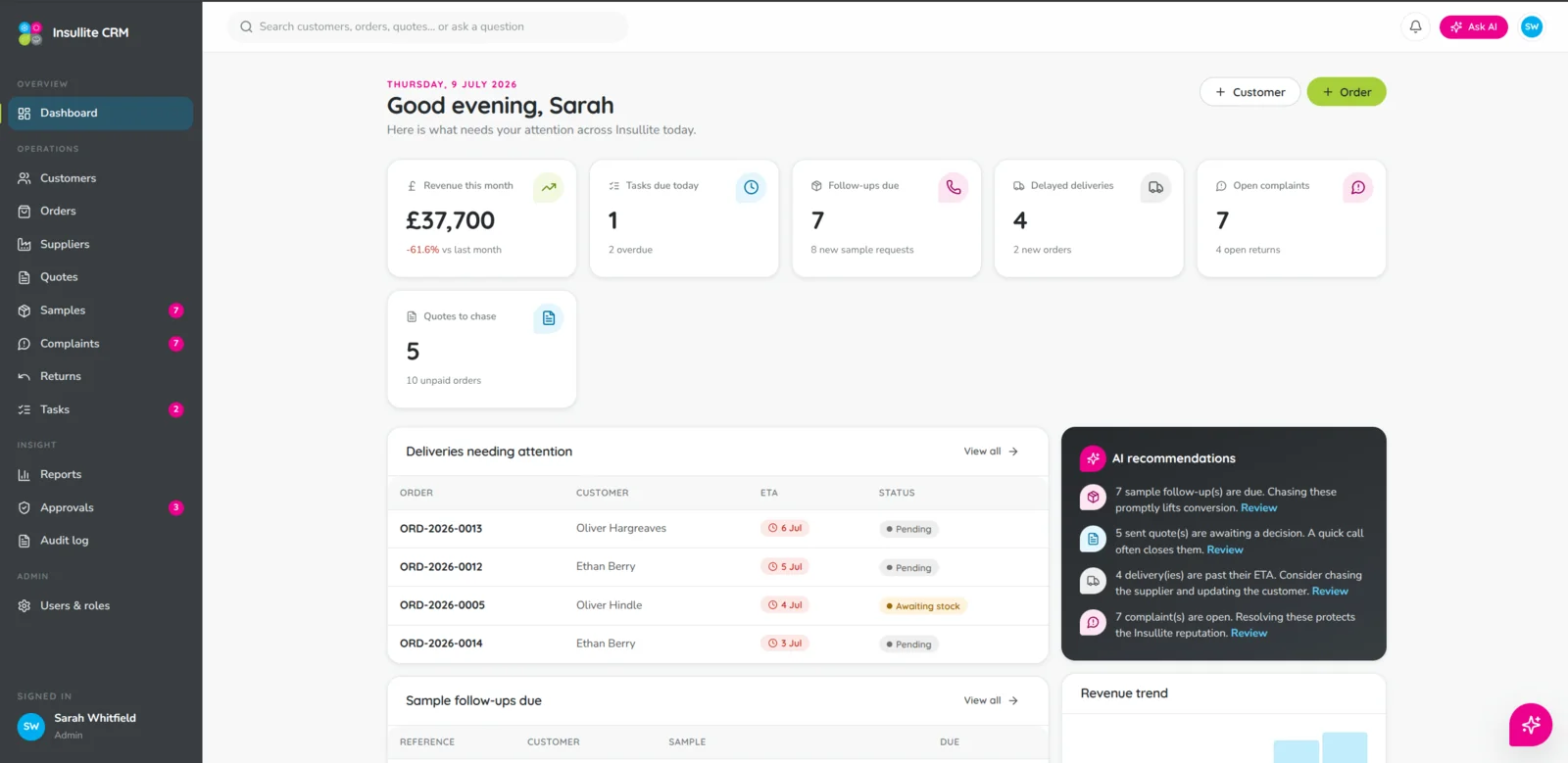
Insullite CRM
An internal operations platform for Insullite Ltd that pulls every brand, from Roofin to Buildin Stores to Plumin, and their back-office systems into one hub, with a permission-aware AI assistant that handles the busywork. Briefed, built and delivered in 24 hours.
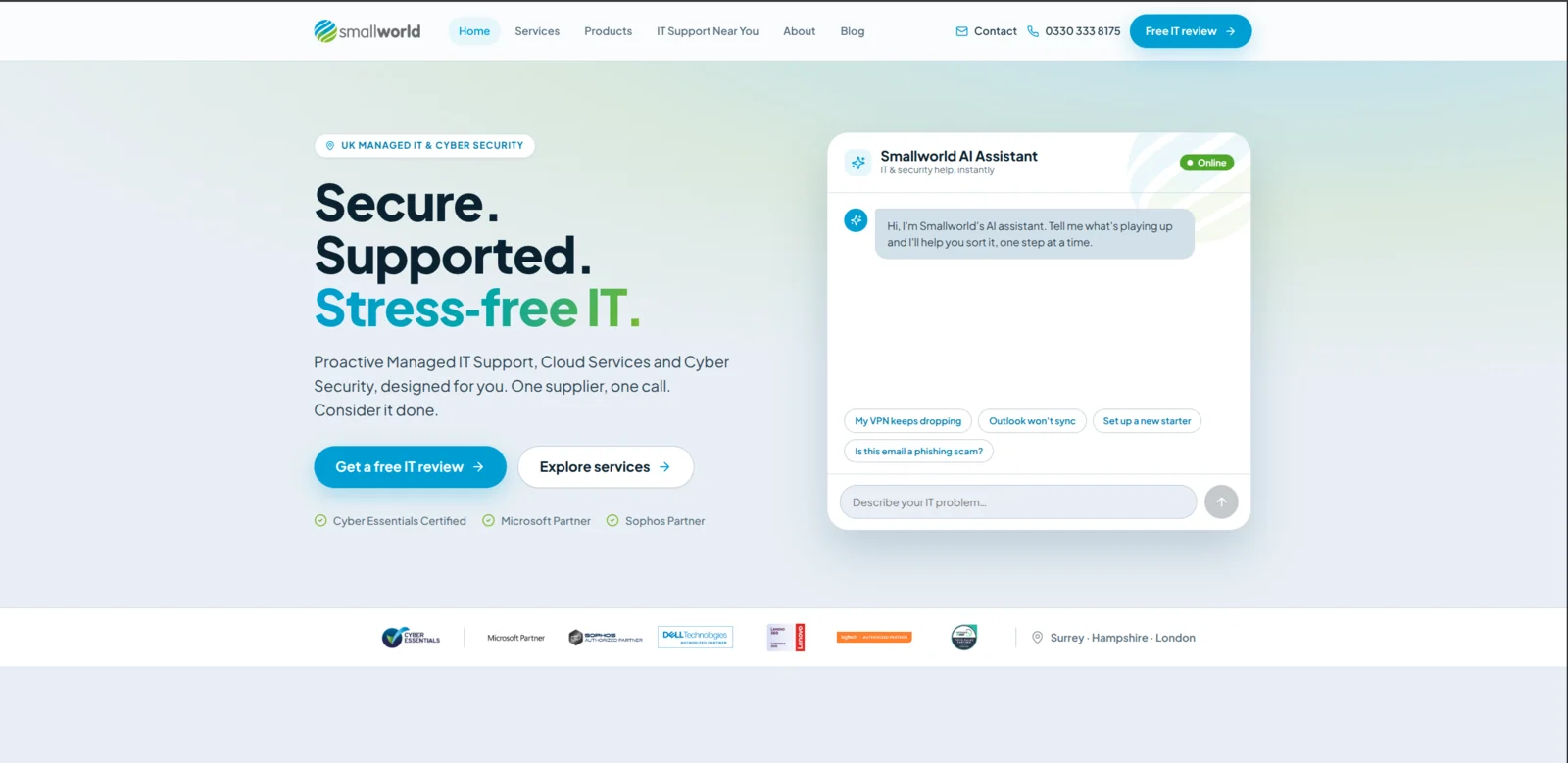
Smallworld IT
A fast, content-rich marketing site for Smallworld IT, a UK managed IT and cyber security provider, built on Laravel with a securely grounded AI IT-support assistant, hundreds of SEO-optimised service, product and location pages, and live industry news. Built in a week.
Ready for a site that survives the referral check?
A £100 deposit secures your build. First preview within 72 hours, and you only pay the balance once you have approved the finished site.